Starting medical weight loss can feel overwhelming — clinical pathways, insurance step-therapy, and true costs all overlap. This visual guide walks through how to decode your treatment options, understand insurance requirements, and estimate the real cost of care. It's a patient's blueprint for going in informed.
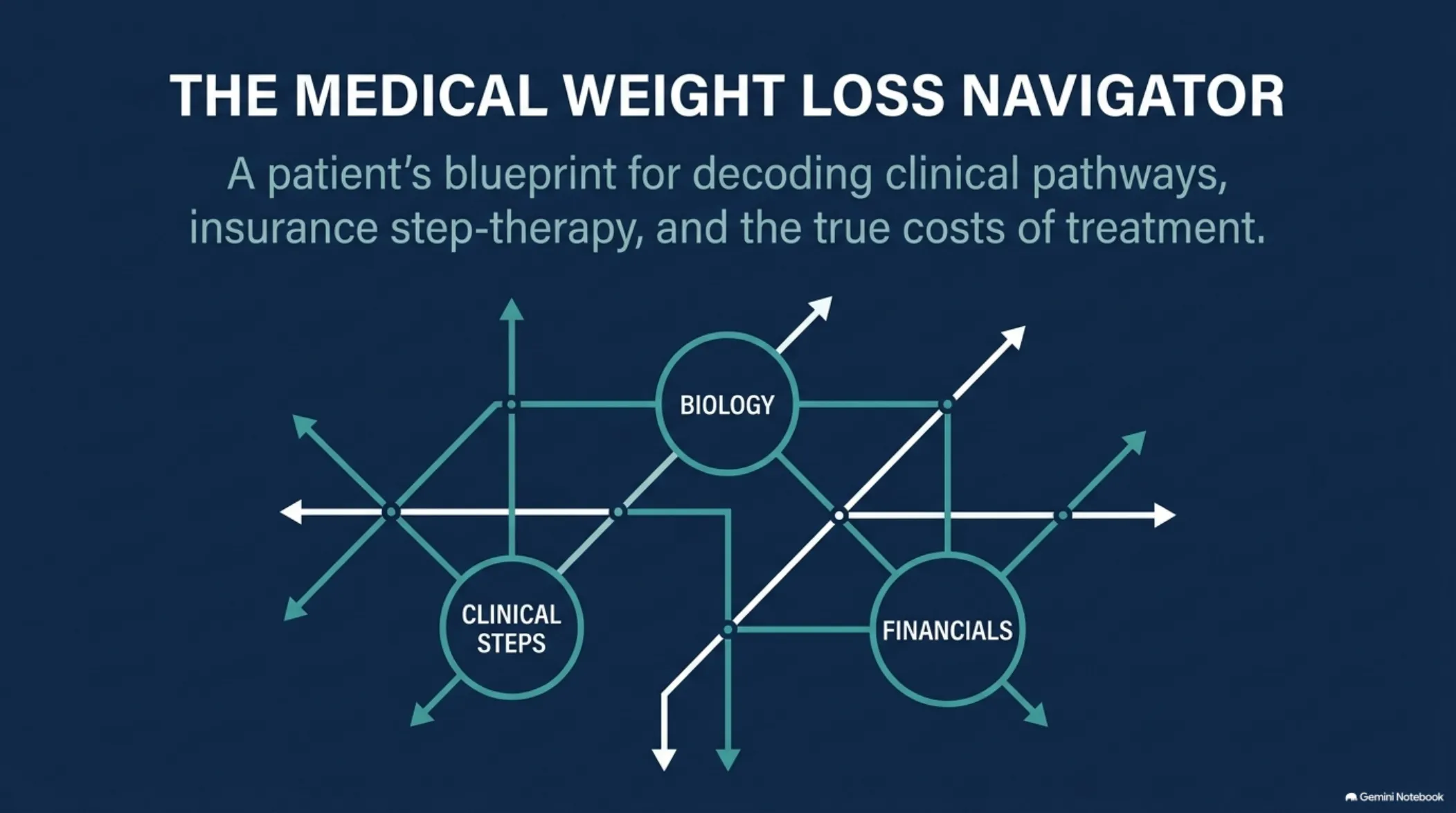
- A patient's blueprint for decoding clinical pathways, insurance step-therapy, and the true costs of treatment.
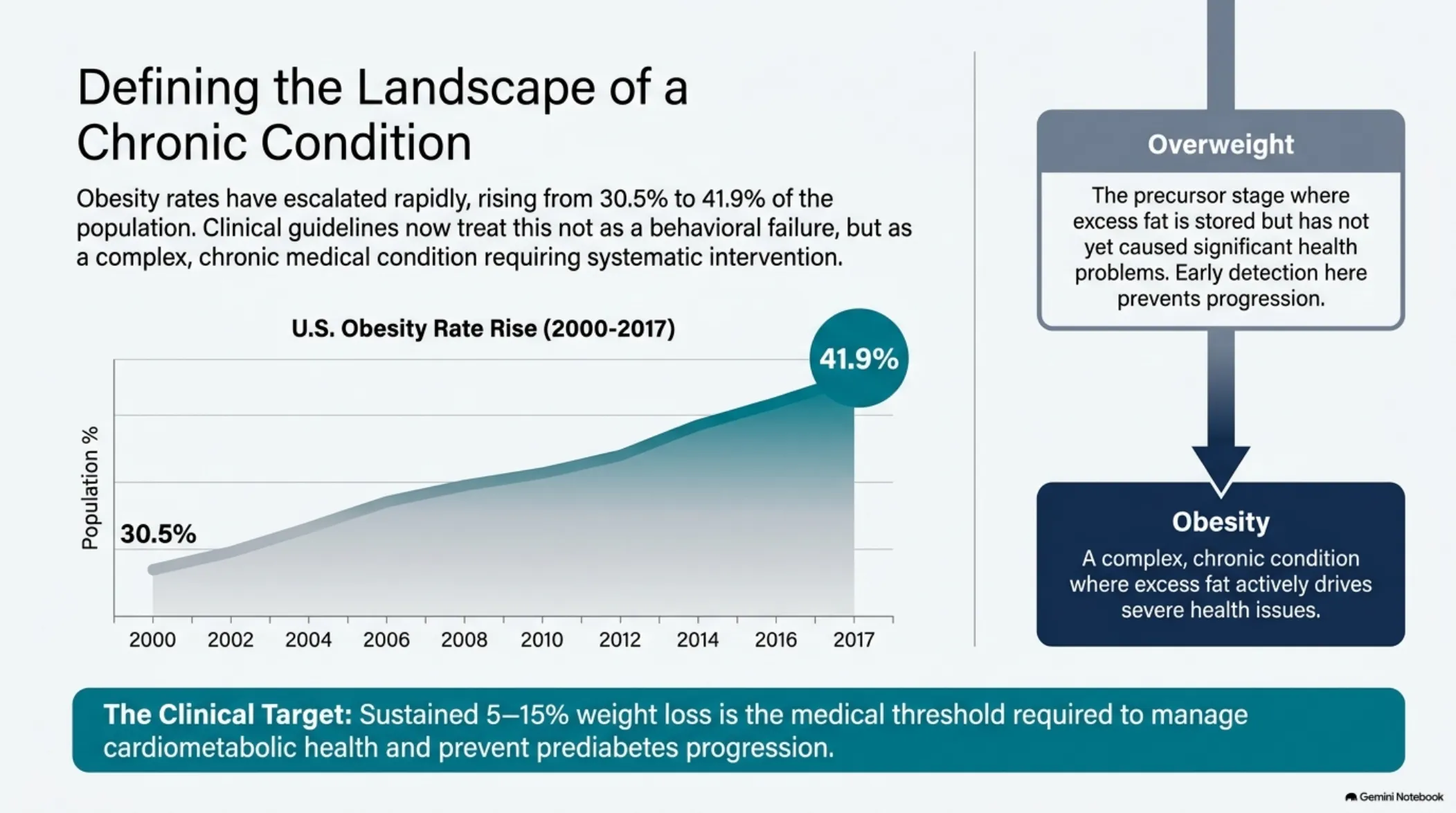
- Obesity rates have escalated rapidly, rising from 30.5% to 41.9% of the population. Clinical guidelines now treat this not as a behavioral failure, but as a complex, chronic medical condition requiring systematic intervention.
- Overweight is the precursor stage: excess fat is stored but has not yet caused significant health problems, and early detection here prevents progression.
- Obesity is a complex, chronic condition where excess fat actively drives severe health issues.
- The clinical target: sustained 5-15% weight loss is the medical threshold required to manage cardiometabolic health and prevent prediabetes progression.
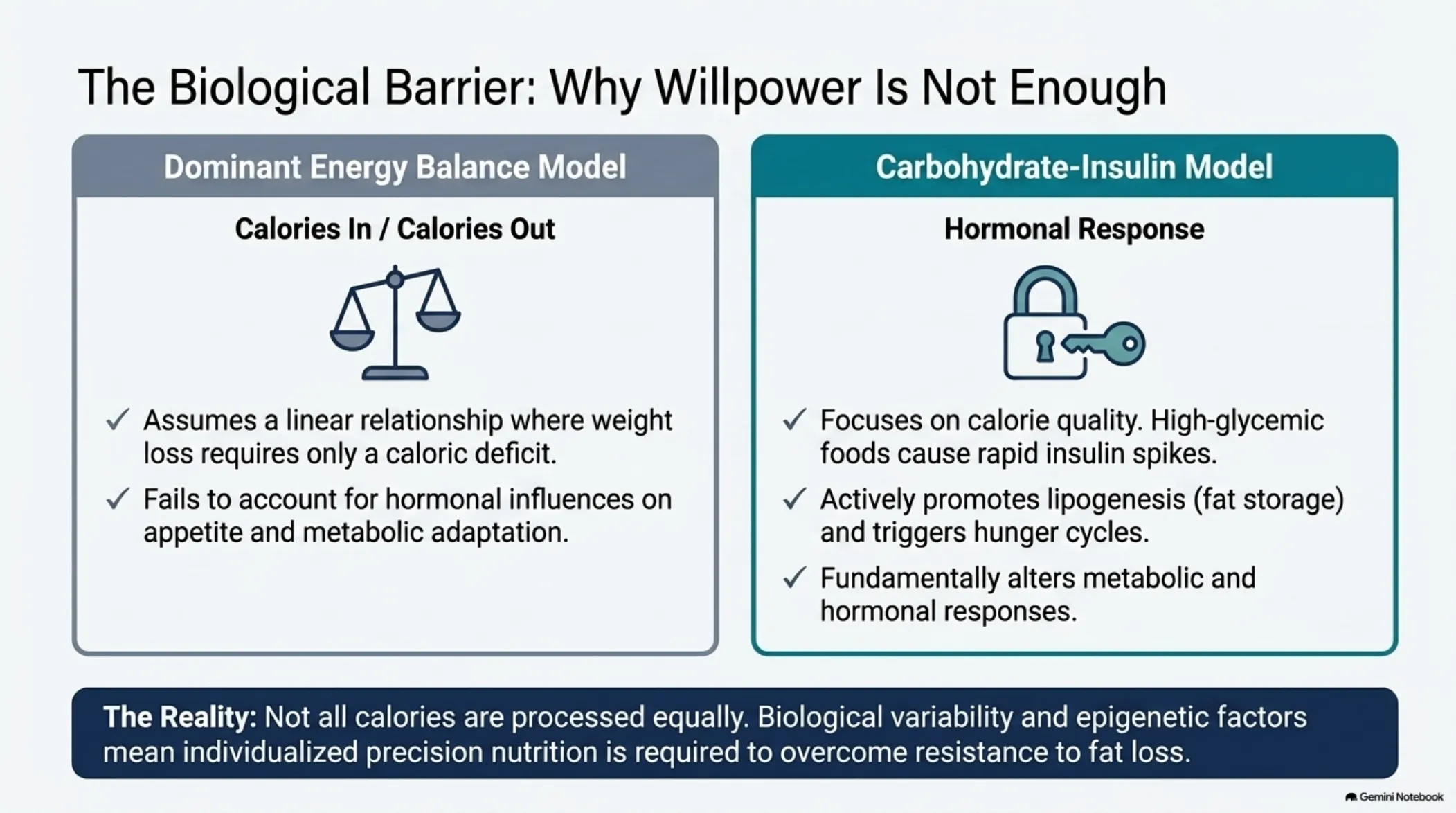
- The Biological Barrier: Why Willpower Is Not Enough Dominant Energy Balance Model Carbohydrate-Insulin Model Calories In / Calories Out Hormonal Response Assumes a linear relationship where weight Focuses on calorie quality.
- High-glycemic loss requires only a caloric deficit.
- foods cause rapid insulin spikes.
- Fails to account for hormonal influences on Actively promotes lipogenesis (fat storage) appetite and metabolic adaptation.
- The Reality: Not all calories are processed equally.
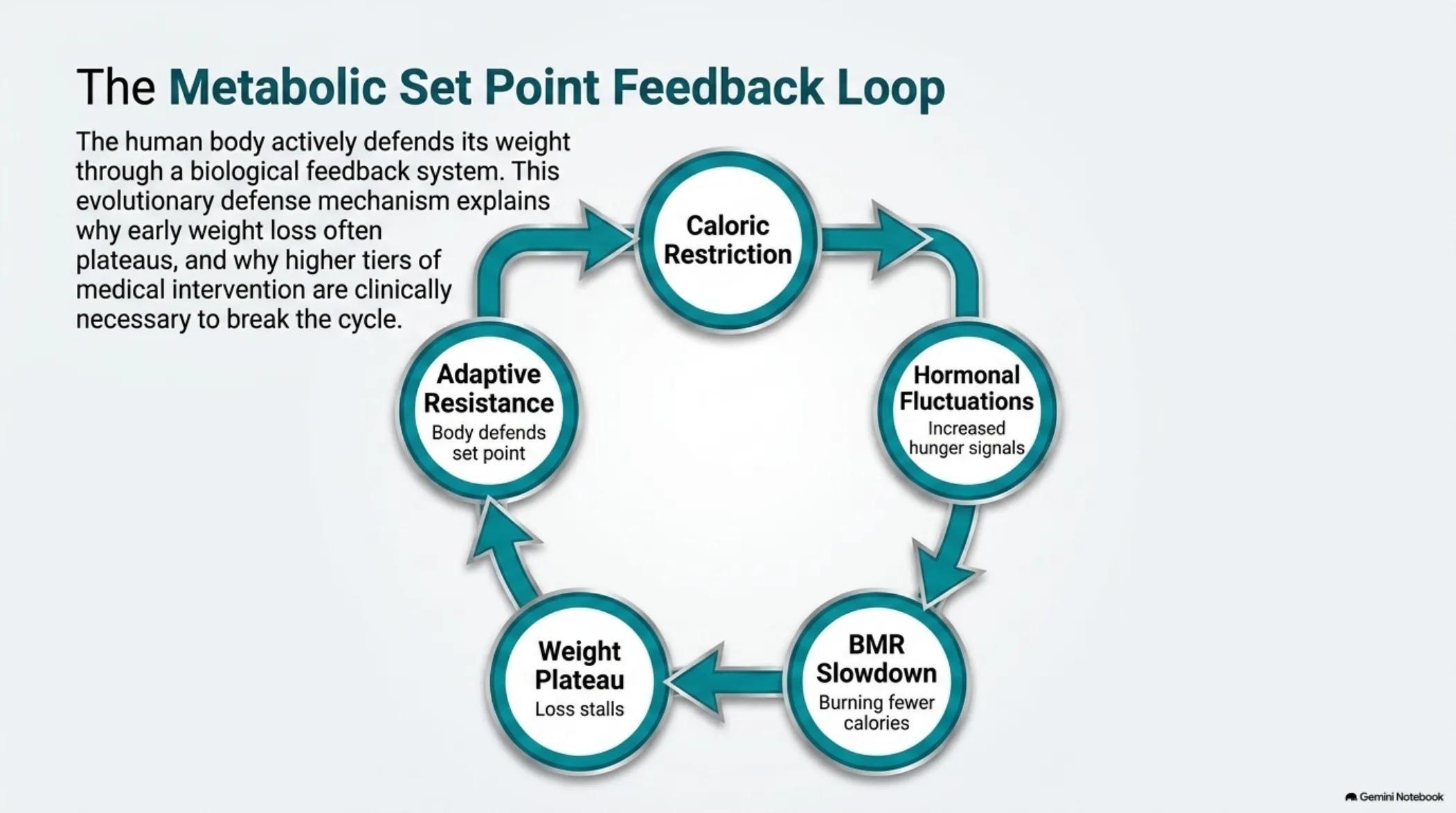
- The Metabolic Set Point Feedback Loop The human body actively defends its weight through a biological feedback system.
- This evolutionary defense mechanism explains why early weight loss often Caloric Restriction plateaus, and why higher tiers of medical intervention are clinically necessary to break the cycle.
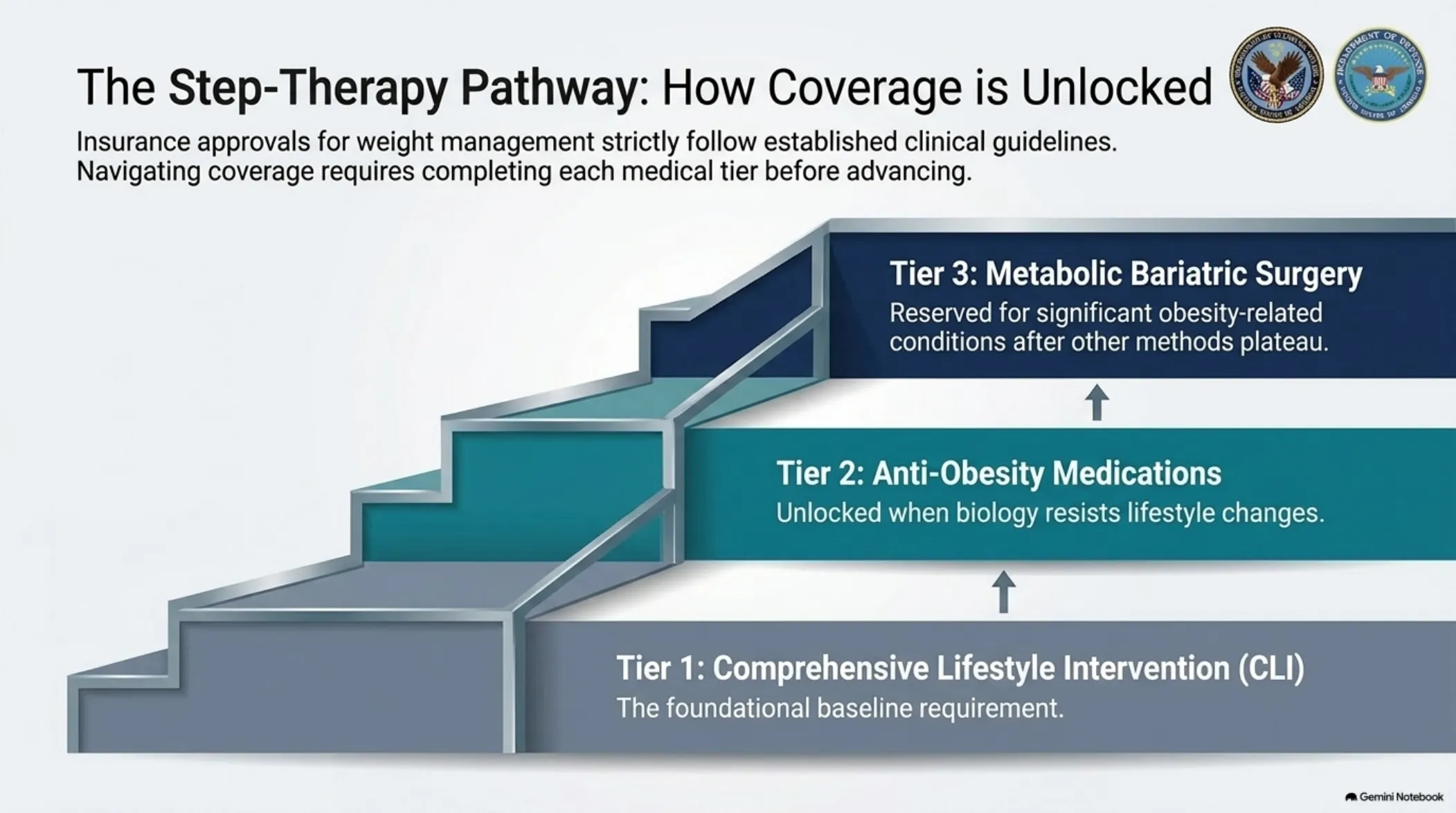
- The Step-Therapy Pathway: insurance approvals for weight management strictly follow established clinical guidelines, and navigating coverage requires completing each medical tier before advancing.
- Tier 1: Comprehensive Lifestyle Intervention (CLI) - the foundational baseline requirement.
- Tier 2: Anti-Obesity Medications - unlocked when biology resists lifestyle changes.
- Tier 3: Metabolic Bariatric Surgery - reserved for significant obesity-related conditions after other methods plateau.
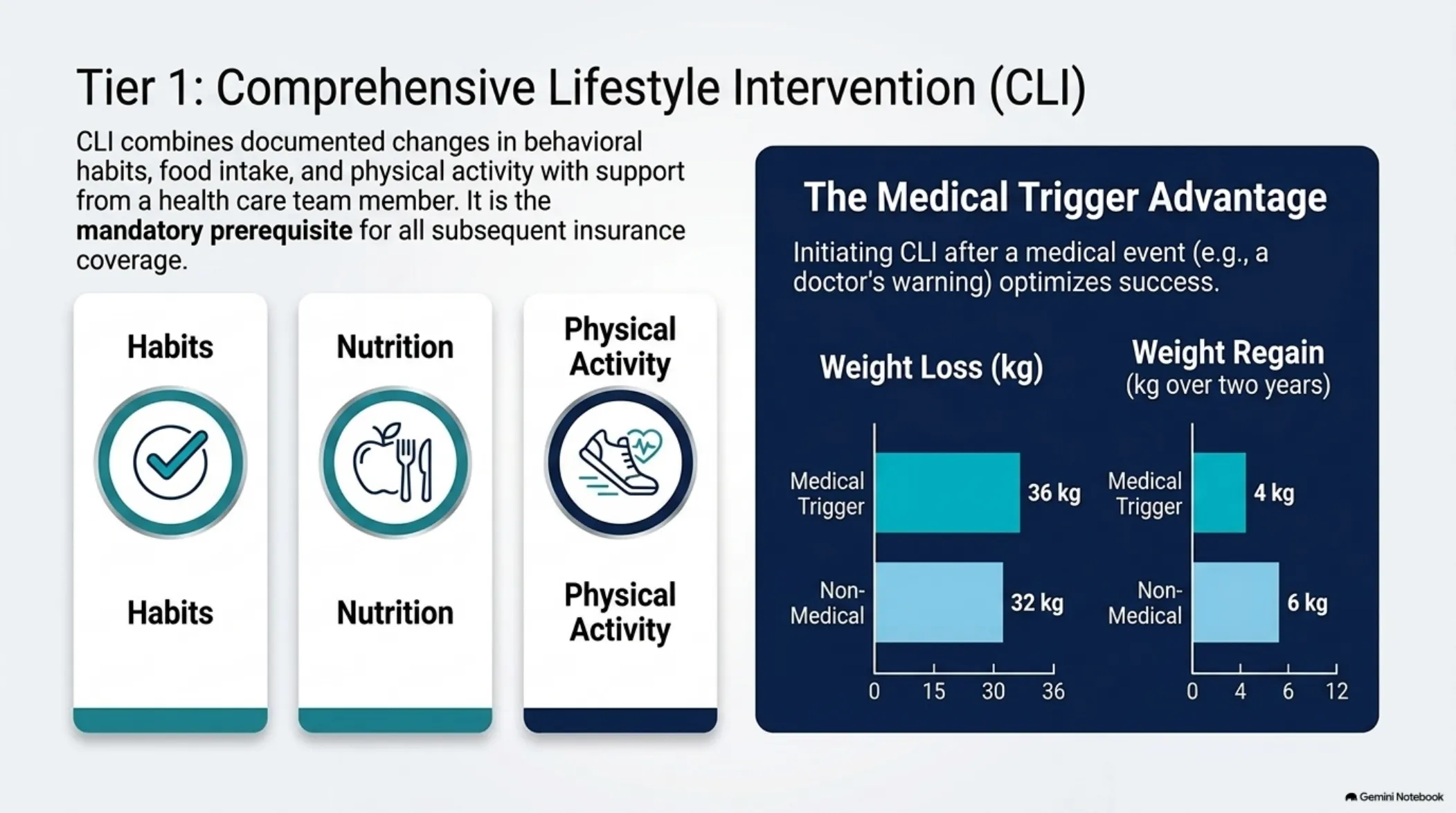
- Tier 1: Comprehensive Lifestyle Intervention (CLI) CLI combines documented changes in behavioral habits, food intake, and physical activity with support The Medical Trigger Advantage from a health care team member.
- It is the mandatory prerequisite for all subsequent insurance Initiating CLl after a medical event (e.g., a coverage.
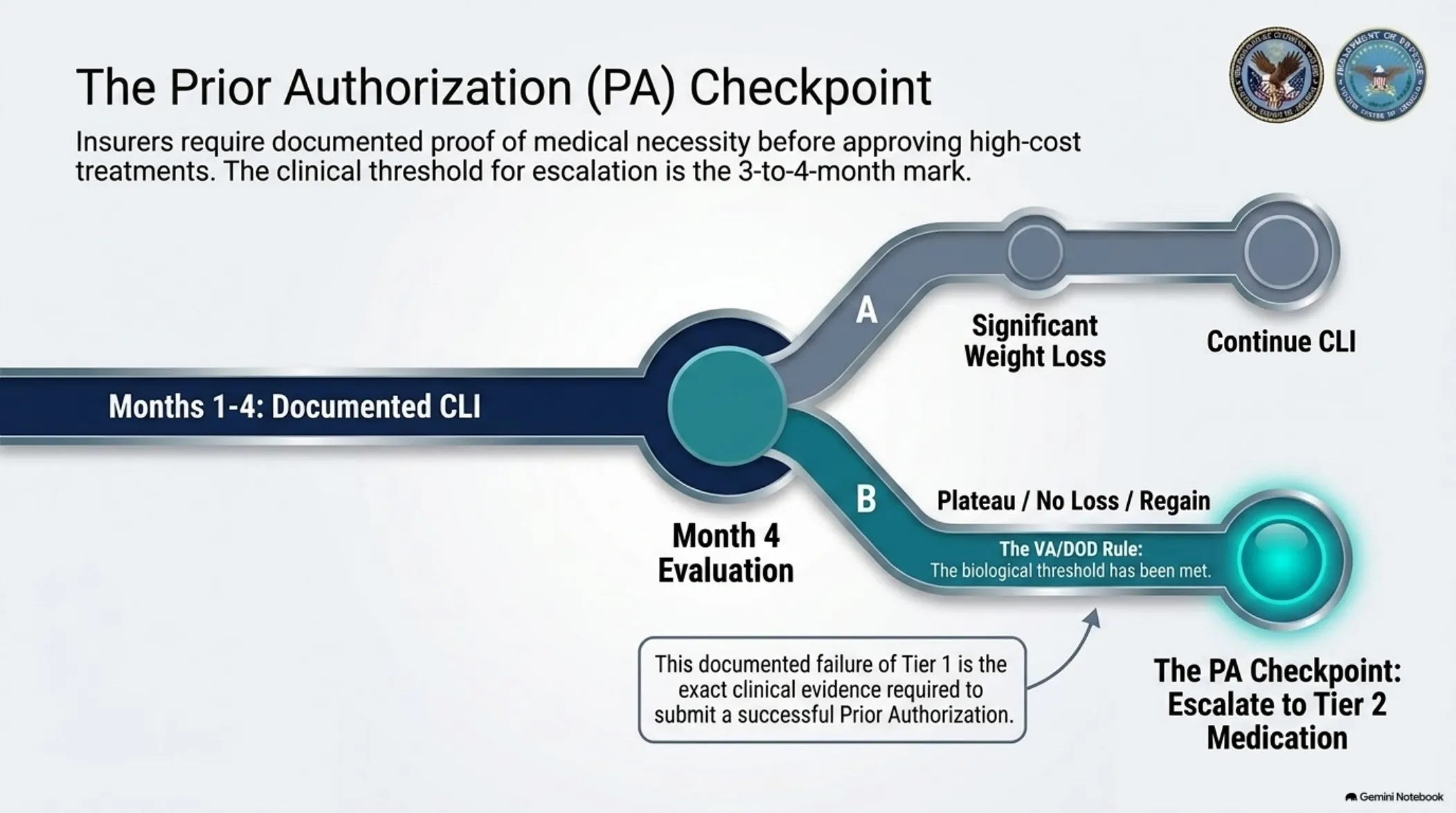
- The Prior Authorization (PA) Checkpoint Insurers require documented proof of medical necessity before approving high-cost treatments.
- The clinical threshold for escalation is the 3-to-4-month mark.
- Plateau / No Loss / Regain Month 4 The VA/DOD Rule Evaluation The biological thresholdhasbeenmet.
- This documented failure of Tier 1 is the The PA Checkpoint exact clinical evidence required to Escalate to Tier 2 submita successful Prior Authorization.
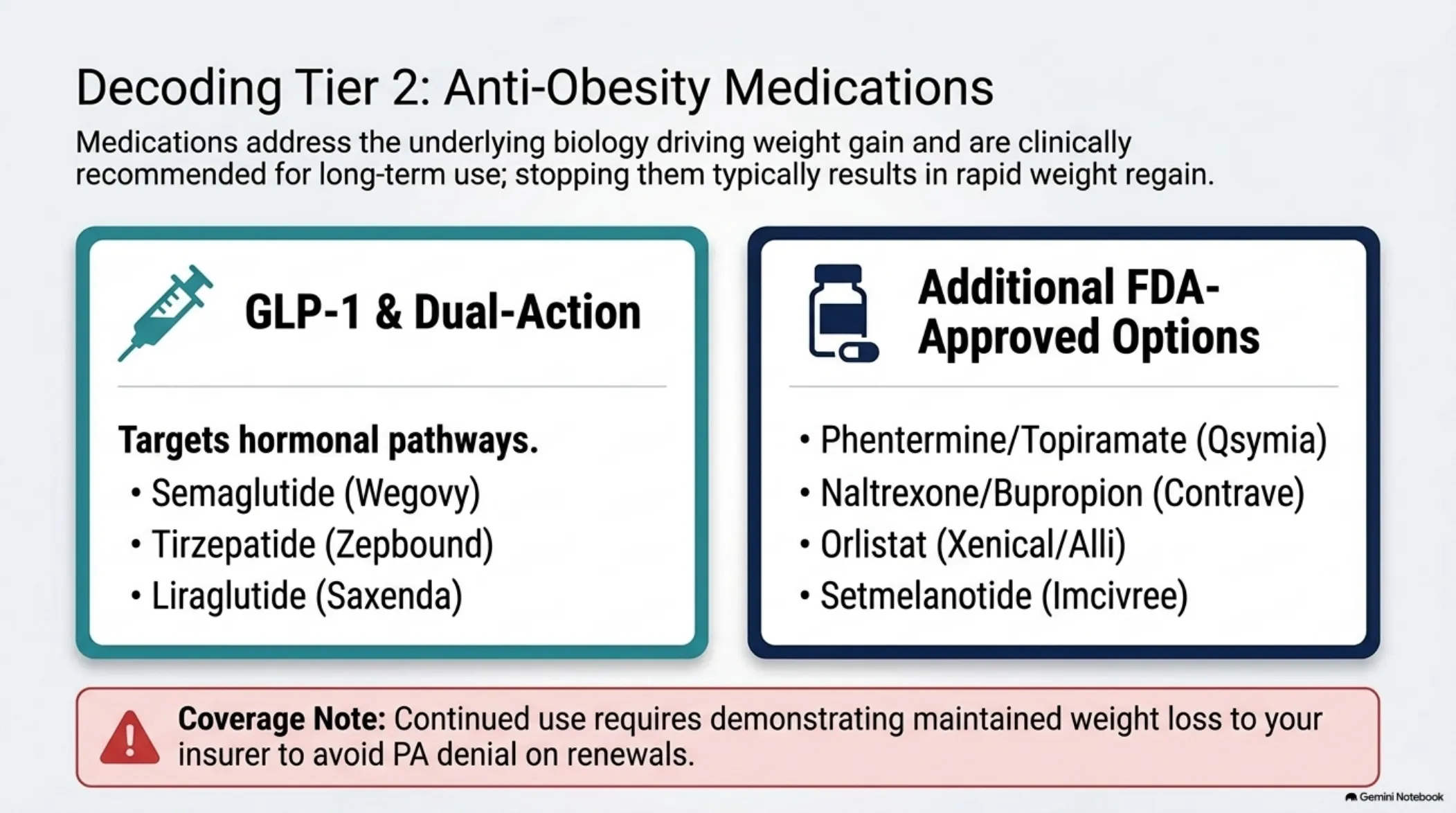
- Decoding Tier 2: Anti-Obesity Medications Medications address the underlying biology driving weight gain and are clinically recommended for long-term use; stopping them typically results in rapid weight regain.
- Coverage Note: Continued use requires demonstrating maintained weight loss to your insurer to avoidPA denial on renewals.
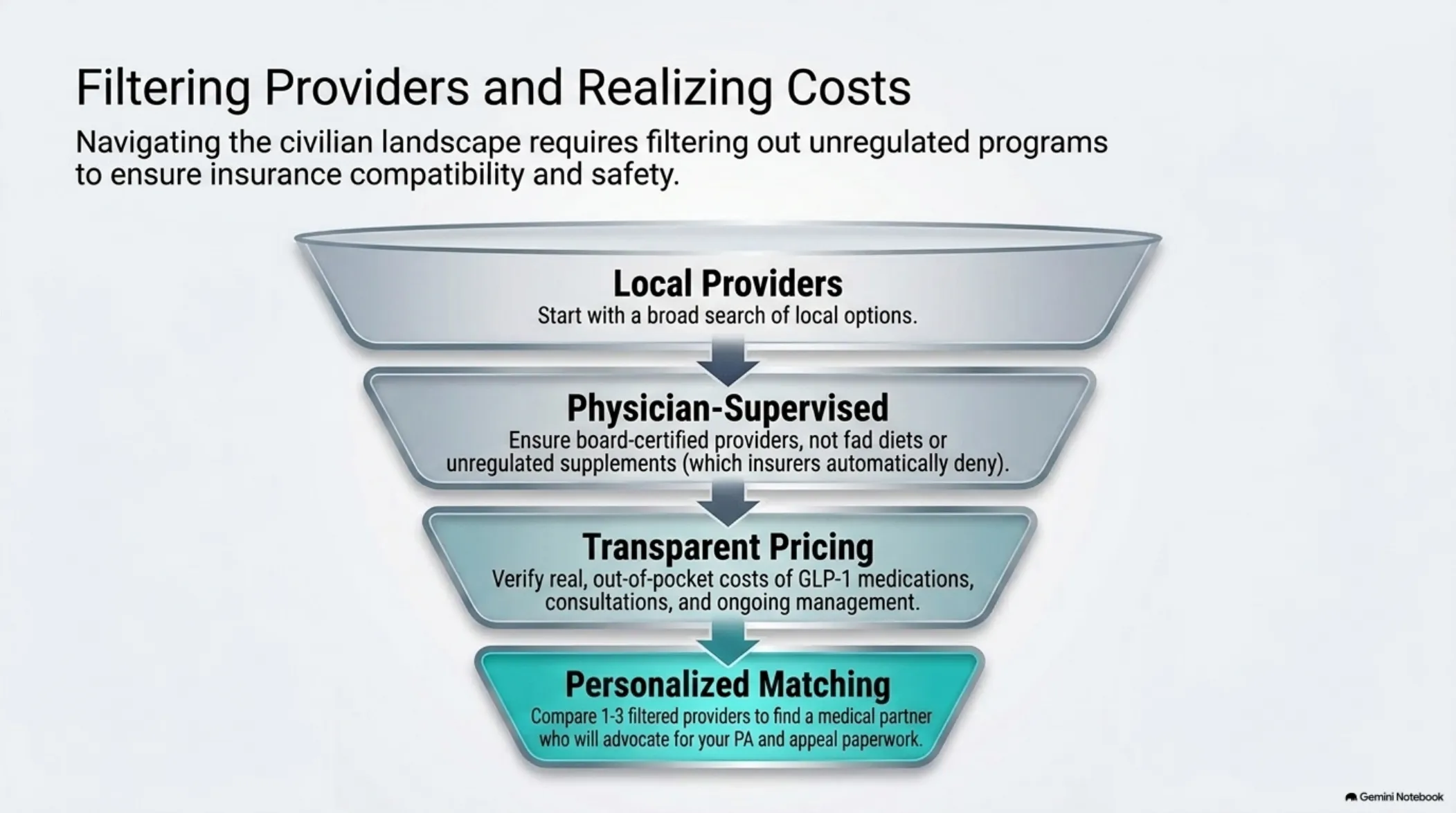
- Filtering Providers and Realizing Costs to ensure insurance compatibility and safety.
- Start with a broad search of local options.
- Ensure board-certified providers, not fad diets or Transparent Pricing Verify real, out-of-pocket costs of GLP-1medications, consultations, and ongoingmanagement.
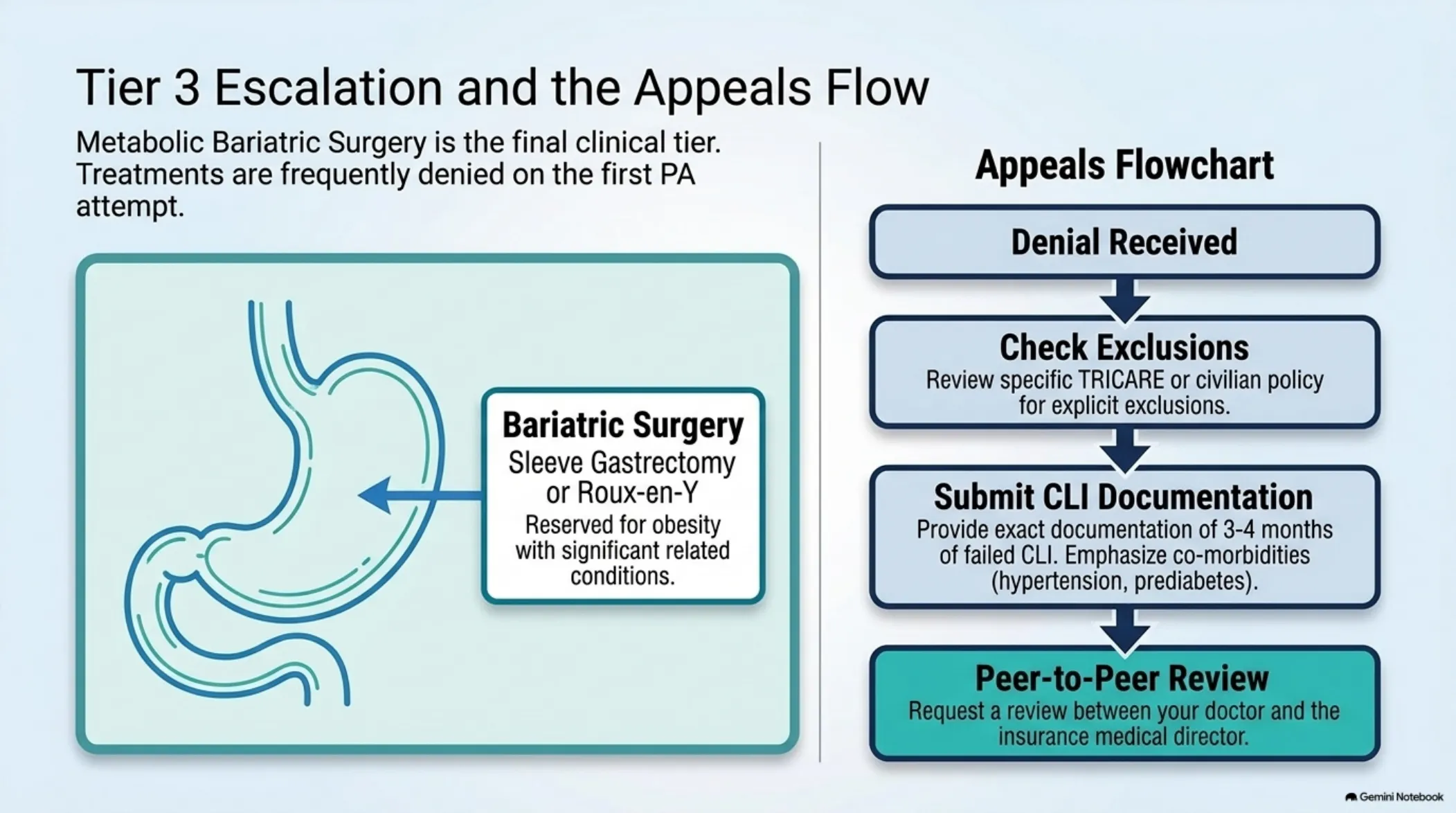
- Tier 3 Escalation and the Appeals Flow Metabolic Bariatric Surgery is the final clinical tier.
- Treatments are frequently denied on the first PA attempt.
- Review specific TRICARE or civilian policy for explicit exclusions.
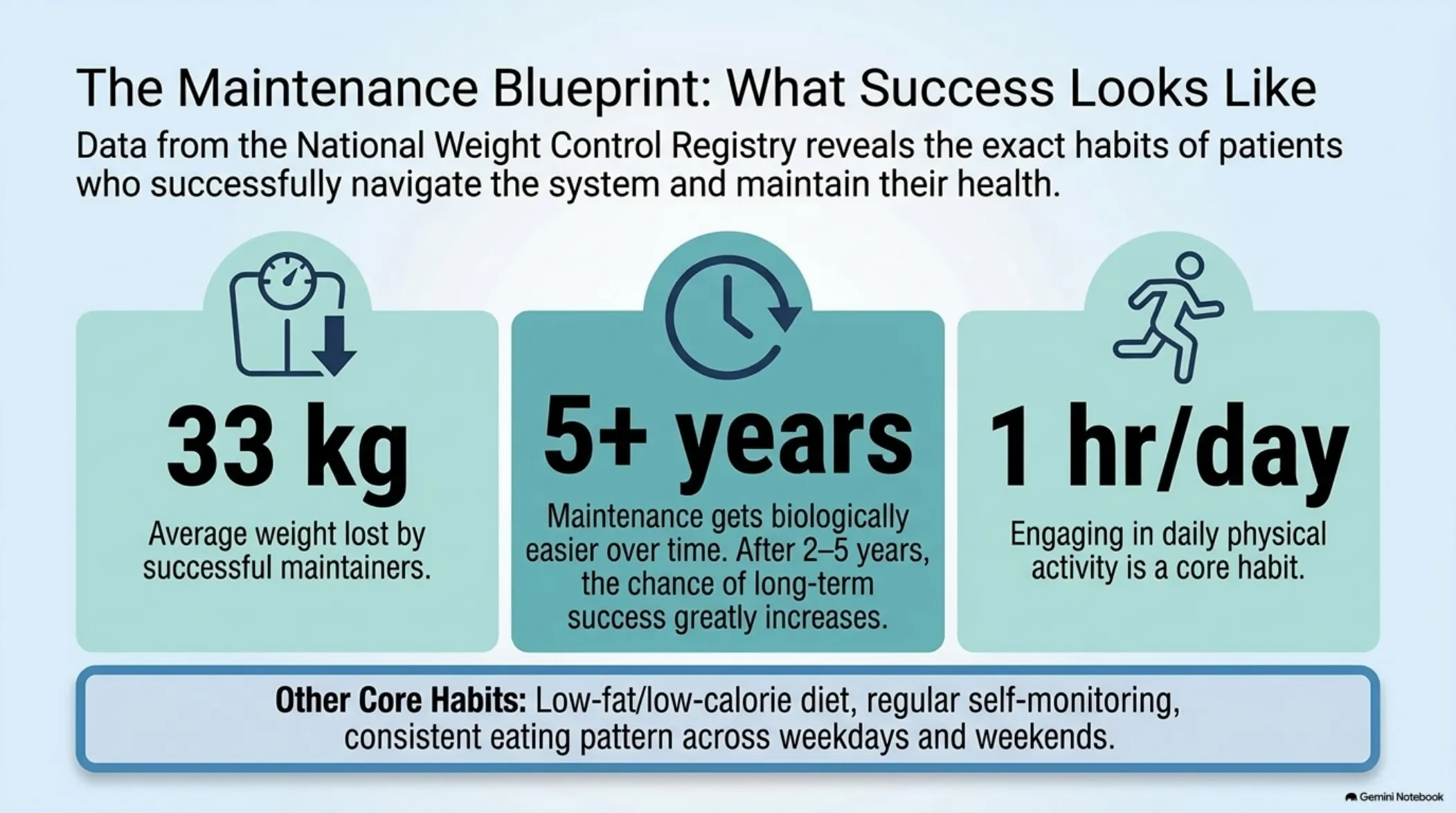
- The Maintenance Blueprint: What Success Looks Like Data from the National Weight Control Registry reveals the exact habits of patients who successfully navigate the system and maintain their health.
- activity is a core habit.
- Other Core Habits: Low-fat/low-calorie diet, regular self-monitoring, consistent eating pattern across weekdays and weekends.
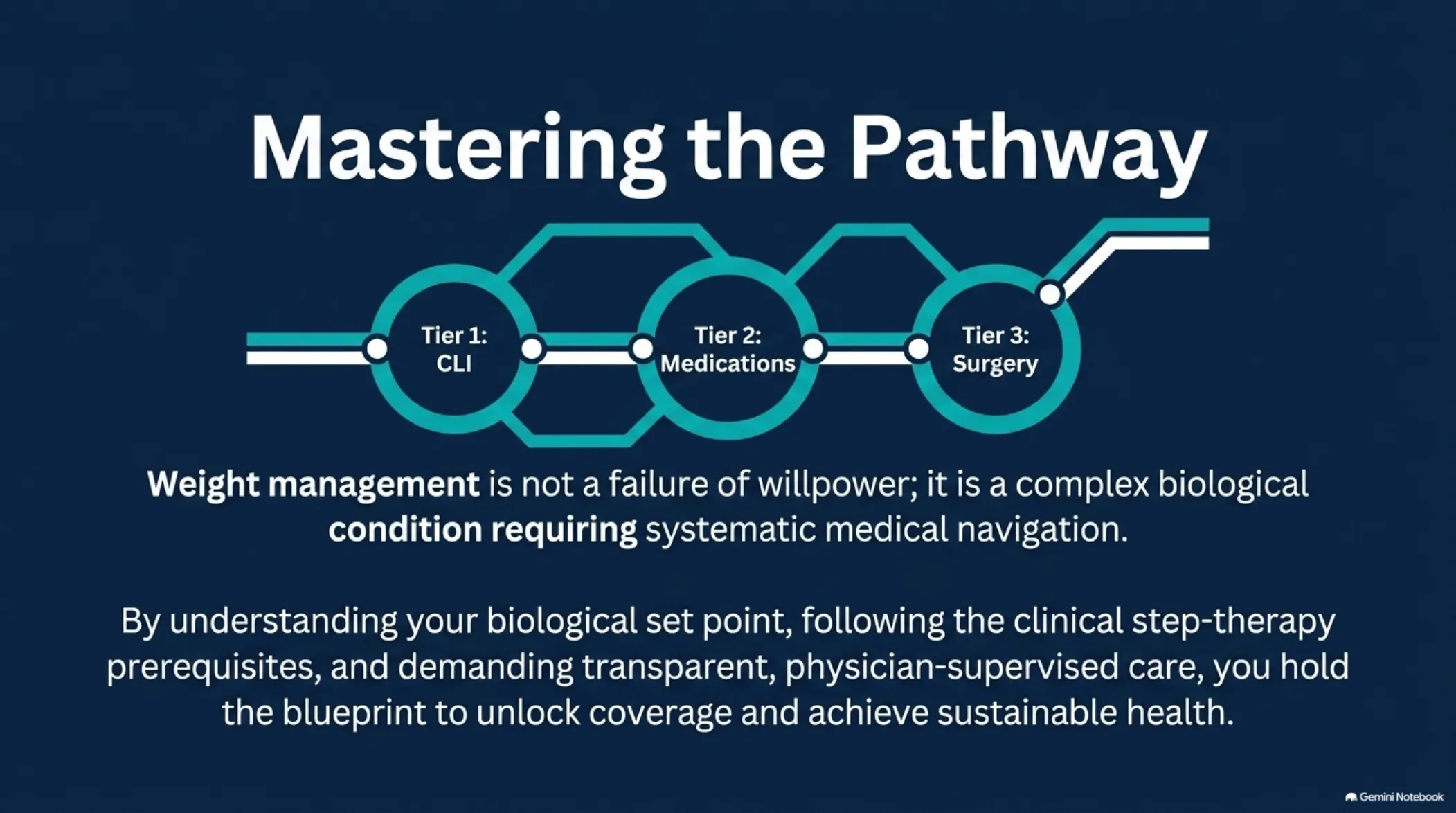
- Weight management is not a failure of willpower; it is a complex biological condition requiring systematic medical navigation.
- By understanding your biological set point, following the clinical step-therapy prerequisites, and demanding transparent, physician-supervised care, you hold the blueprint to unlock coverage and achieve sustainable health.
1 / 12